Technology and Business working in tandem
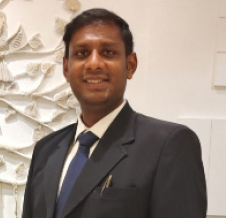
Prosenjit Sen,
Director- Channels,
BlackBerry, India
Today business and technology are intimately related to each other to the extent that running a modern company in all its complexity and scale would be impossible without information technology. We can safely say that business and technology must be integrated into a coherent “business technology (BT)” strategy.
Technology upgradation is something of an absolute must for finding out how to reduce the overall IT delivery cost. Against the backdrop of not-so-good-times on the economic front, there is an urgent need to address the challenge of minimizing the overall maintenance costs while at the same time providing enhanced service levels with increased number of users remains the task.
Cloud, mobility and big data initiatives are helping organizations solve pressing challenges, while driving accelerated innovation, enhanced agility and improved financial management.
 |
Navin Sadhwani - Head Channel & commercial business – RSA says "Mobility, ecommerce, cloud computing, big data will be the key business drivers for IT Business in India. Investments in large infra and modernisation projects funded by the government will impact IT growth. Data security and compliance will form the underlying basis of all initiatives."
BYOD
Businesses are increasingly looking at technologies that gives them competitive edge and profitability. Mobility solutions are of paramount importance and concepts such as cloud computing, VOIP and secure communications are the most primary technologies deployed.
The move by IT to allow BYOD by employees hits mainstream; the corporate-issued laptop begins to become a bygone piece of equipment. IT realizes that it's able to control devices remotely through virtualization while simultaneously allowing individuals to use the devices that make them happiest and most productive.
As businesses are in the process of allowing employees to bring their personally owned computers, smartphones, and tablets into the workplace and access corporate applications, the popularity of BYOD is increasing fast. This will allow application availability at anytime, from anywhere, and will help business slash procurement costs.
 |  |  |  |
| Saurabh Grover, Director AOC Monitor & Tablet Business, India | Kartik Shahani, Country Manager, RSA India | Vishak Raman, Senior Regional Director, Fortinet India & SAARC | Rahul Agarwal, Executive Director, Commercial Business Segment, Lenovo India |
However, the increasing popularity of these devices will create several problems for IT departments as they attempt to mitigate risk, and this signals a tough future for PC and laptop manufacturers. When it comes to BYOD, one of the most overriding threats is the loss and theft of these devices.
Fortinet understands that there is no silver bullet to address the challenges posed by mobile devices. Solving the many problems required a technology-driven, multi-pronged approach. Vishak Raman, Senior Regional Director, Fortinet India & SAARC, Fortinet, says, “BYOD provides a variety of advantages to organizations, ranging from improved productivity to increased ROI for IT departments. However, a BYOD environment also lacks many of the traditional security controls that organizations have relied on to secure their data, leaving gaps in their data and device protection strategy.”
With smartphones becoming a basic tool of communication, organisations have encouraged its employees to use their own smartphones for work. “While BYOD has helped organisations save on costs, it has also made organisations venerable to security breaches as multi- platform devices are connected to it network infrastructure. This is by far the most real trend that we believe will affect the IT business today,” says Prosenjit Sen, Director- Channels, BlackBerry, India.
“Ultimately 2014 will be the year when the market will observe a clear movement to smarter notebooks, tablets, smartphones powered by apps hosted in the cloud,” says Rahul Agarwal, Executive Director, Commercial Business Segment, Lenovo India.
Rahul adds, “We see a push and pull based method to initiatives like BYOD due to consumerization of IT, as companies comprehend that it boosts employee satisfaction and efficiency in the enterprise. It is a positive shift and we are equipped to support the trend by offering growing number of mobile computing devices for our enterprise customers.”
 |  |  |  |
| Govind Rammurthy, MD & CEO, eScan | Tushar Sighat, CEO D-Link (India) Ltd. | Chetan Naik, Director & Regional Executive - IBM India West | Srikanth Karnakota, Director Server and Cloud Business, Microsoft India |
Cloud Computing
It can be said without a shadow of doubt that transition of cloud computing from being the latest industry buzz word to an accepted operational expenditure is nearing completion. Cloud has emerged as an IT service that businesses, both enterprises and SMBs, have already adopted or are in the process of evaluating its adoption. The adoption of cloud computing by SMEs is also increasing at a greater pace. According to a survey it has been found that the number of companies with 10 or fewer employees adopting paid cloud services will triple in the next three years.
 |
Amod Ranade,
General Manager- Data Center Business Development,
Schneider Electric
Amod Ranade, General Manager- Data Center Business Development, Schneider ElectricIT Business India, sees increasing adoption of Cloud Computing. He says “Large datacenters are being built to exploit opportunities in cloud adoption and hosting services. Banking sector is also moving towards Co-Location facilities.”
According to Amod, verticals that are adopting IT faster are manufacturing, retail, healthcare, BFSI and IT/ ITES. There is a movement towards higher power densities in data centers where consolidation, high density servers, and virtualization are major drivers. Enterprises are going all out to replace traditional data center infrastructure technologies and management processes to more hybrid models, however the trend that is really looking up is the adoption of cloud computing by major companies, leading again to outsourcing of data centers. “Customers are also adopting outsourced data center services to curb rising power, cooling and real estate cost,” says Amod.
Mobility
For those in the mobile industry, 2012 has been a year when there has been a lot to celebrate and an equal amount to be concerned about. Restrictions and regulations are growing.
Enterprise mobility is one of the trends that have been one of the catalysts in the growth of the IT sector. Increased business process automation and remote access to the network constantly for creating a Virtual workspace had been the need of the hour. The increasing mobility into business is helping the workforce to increase productivity, real-time execution and team collaboration at very low cost.
IT business in India is shrinking year on year. This is not for India but all over world the scenario is same. Here by IT business we meant PC, Laptop and Monitors. “If we talk about major trend the first would be Next-Gen Mobile - Smart Devices and Tablets,” says Saurabh Grover, Director AOC Monitor & Tablet Business, India.
Virtualisation
With the passage of time virtualization is all set to play a bigger role as IT organizations morph into more and more of a services management framework. Many companies are quickly realizing the value in moving to virtualisation.
Virtualization has been commoditizated. Fast becoming a natural way of doing business, today it is less about the process and more about the business enablement of what virtualization allows the clients to do that they couldn’t do before.
Virtualization facilitates consolidation of infrastructure and hardware by replacing physical servers with virtual machines, and by combining applications on virtual servers. Hence, it leads to reduced space and cost of IT infrastructure. Over the years, there have been many security concerns within a virtual environment.
Software Defined Networking
As companies move to a cloud environment, legacy network architectures are buckling under the pressure for instant access to applications and services that offer a high-quality user experience. Organizations also are struggling with the complexity of current data center network fabric designs, which require manual device-by-device configurations and limit the performance of bandwidth-intensive applications.
As service providers try to meet the increasing demand, and juggle the complexities of running a profitable business – reduce CapEx and OpEx while increasing service responsiveness – they are looking for technology alternatives that will streamline service creation and foster innovative applications and services. Software-Defined Networking (SDN) offers a means of doing this. SDN links networks and applications, enabling direct programmatic control of both networks and orchestration layers in line with end-user application needs, rather than programming around the network, as is done today. IDC predicts that by 2016, the market will be worth $2 billion (USD) a year, up from just $168 million today. “With the promise of SDN architectures radically decreasing total cost of ownership (TCO), and vendor innovation/support continuing to increase, we envisage that we’ll see pockets of actual SDN service deployments across the globe…primarily in the U.S. and Japan initially,” says Edgar Dias, Regional Director, India of Brocade Communications,.
 |  |  |  |
| Sunija Rishi, Co-Founder and CMO, Nevales Networks | Sudhindra Holla, Country Manager, Axis Communications India | Anuj Jain, Managing Director, Eurotech Technologies Pvt Ltd. | Levis Wilson, COO, *astTECS |
Social media
Adaptation of social media platforms continuously introduces an additional set of vulnerabilities towards the consumer segment. Also, when many technology trends and technologies combine, they have a much greater impact. Hence, implementing the right security needs at such situations become a complicated task.
Cloud Security
With the cloud computing becoming preferred choice of the business more so in uncertain economic landscape, these are hey-days for the cyber villains who find cloud as greener pastures for making money by hacking cloud infrastructure.
Security is becoming complex with the each passing day. A decade earlier businesses were happy by giving their employees logins to the networks and asking them not to divulge their passwords to anyone. That was the end of security advice. Needless to say, the security scene is far more complex and IT managers are under pressure to secure the company’s digital assets and network.
“While market is still maturing to cloud, in India, Security and continuous availability of power are the key deterrent for the industry to adopt cloud,” says Kartik Shahani, Country Manager, RSA India.
Govind Rammurthy, MD & CEO, eScan, says, “Currently, BYOD i.e. the Laptop and Smartphone users pose a significant threat to IT infrastructure. Also with the increasing adoption of Cloud technology, it has too become one of the prime focuses for cyber criminals. Hence, we will be focusing on these technologies and trends.”
Managed Services
Enterprises are putting stock in managed services as a cost-effective measure for dealing with their IT concerns. Going by the recent trends, it seems that managed services are no longer the preserve of large organizations as SMEs are looking to this model to lower costs.
As a matter of fact, those who don’t have the manpower, equipment or experience to build out their IT offerings are prime customers for the services of an MSP.
The advantages of managed services can be enormous. The managed services model is cost-effective because it offers enterprises a way to make the most of their capital by fulfilling their IT needs on a pay-per-use basis.
“Amplified adoption of cloud-based computing is impacting the way security is consumed. The overall scenario will lead to more managed security service providers through cloud delivery. More on the way is expected, such as data-loss prevention, encryption, and authentication as technologies are aimed to support cloud computing mature,” says Sunija Rishi, Co-Founder and CMO, Nevales Networks. “The market is shifting to more integrated systems and ecosystems and swiftly drifting away from loose varied approaches,” adds Sunija.
 |  |  |  |
| Yogesh Agarwal, CEO, Applane | Nikhil Jain, COO & Director, Elitecore Technologies | Edgar Dias, Regional Director, India of Brocade Communications | Sunil Sharma, VP Sales & Operations, India & SAARC, Cyberoam |
Overall Market
The Indian information technology sector continues to be one of the sunshine sectors of the Indian economy showing rapid growth and promise. The coming period is expected to be the year when business revenues and market share will return or exceed levels.
Depreciating rupee along with weak market sentiments continue to hover around. Current market trend is certainly disturbing, and a stringent action from our economic policy makers is vital. Beginning April 2013, Indian currency has crashed by over 13% & various report suggest more challenging times ahead. The ongoing economic turmoil is most likely to have an impact across various industry verticals.
We see growing potential for the surveillance industry in India and gradual adoption of technology to secure the society. Eneromous demand for surveillance equipment in the Indian market is being witnessed ,” says Sudhindra Holla, Country Manager, Axis Communications India.
“While the market sentiment at the moment is uncertain, India in recent past did witness steady growth rate. Report released by World Bank hinted that India is likely to register a growth rate of over 7% by 2015,” says Tushar Sighat, CEO - D-Link (India) Ltd.
Today India is widely recognized as economic powerhouse of this wave of globalization. Overall India is an ambitious & energetic nation with huge business opportunities lying ahead.
“However past few days have been encouraging, with rupee gaining confidence and market sentiments seems positive,” says Tushar.
Ashootosh Chand, Director of Business Development, RIPL (Ricoh Innovations Pvt Ltd.), “So, in a way, the impact of a depreciating rupee will be offset by other appreciating currencies. I personally feel that the way to take pressure of the falling rupee and a not-so-good economy is to create a regulatory environment that enables businesses to flourish.”
The Banking industry in India has grown at a rate of over 11 percent in the last three years, from $101 billion in 2009 to an estimated $125 billion in 2011. ( RBI & Industry sources). “BFSI has always been an early adopter of technology and this holds true in the case of newer technologies as well. That said, auto and manufacturing, pharmaceuticals and logistics are upcoming sectors where mobility plays a critical role,” says Prosenjit of BlackBerry.
“Retail banking in India is maturing with time, and this growing sector provides a significant opportunity. Recent RBI regulations are set to drive increased IT investment in the sector,” says Chetan Naik, Director & Regional Executive – IBM India West. The mobile banking/ mobile payments revolution underway will transform the retail banking and telco industries as we know them today. There is sufficient evidence that traditional banking channels are just too expensive to serve clients in large geographic areas with low population density.
“The weakening rupee does make the BPO sector more competitive and this coupled with recovery in the US economy may enable near-term growth. Every percentage point decline in the rupee adds 30-40 basis points to an IT/BPO company's operating margins. However, market factors would limit the extent to which BPO providers can take advantage of this trend,” says Srikanth Tanikella, Director of Operations for Williams Lea India.
Levis Wilson, COO, *astTECS, says, “According to Industry reports IT budgets for 2013 in Asia Pacific are in better shape. India leads the region in budget expansion and the situation is less bleak here, we are even ahead of china. The other major spender on IT budgets in the Asian region is Philippines.”
 |
Ashootosh Chand,
Director of Business Development,
RIPL (Ricoh Innovations Pvt Ltd.)
“Industries like retail, professional firms and services, real estate are definitely moving faster than others in terms of IT implementation. The education vertical is catching up as well. Chemicals and pharmaceuticals seem to be moving slowly,” says Yogesh Agarwal, CEO, Applane.
“The economic conditions might stall / postpone projects for some organizations but deploying security solutions has become a necessity for one and all. We see a rise in this business area. GDP might grow at around 5% + this year. In comparison, network security and allied IT industry is likely to witness a double digit growth. We have already captured this growth in the last six months which is more than 25% vis-à-vis last year,” says Sunil Sharma, VP Sales & Operations, India & SAARC, Cyberoam.
Nikhil Jain, COO & Director, Elitecore Technologies sums up it well when it says, “ Elitecore is not into This is a temporary phase and markets should stabilize eventually.”
 |
Harish Kohli,
Managing Director,
Acer India
"We believe the current economic conditions are temporary as the Indian economy is now showing signs of recovery. With the consumer buying also showing a positive sign, we are confident the market will also soon follow a growth trajectory.” Harish adds, “ We are confident that the PC market will exhibit higher growth with certain verticals such as Education, BFSI, Telecom and Infrastructure, increasing their IT investments. Considering the low PC penetration in our country, we expect it will only grow, fuelled by the demand from SMB, education, government sectors. Moreover, the upcoming festive season is also expected to boost retail sales significantly."
IT is something which would never lose its importance. In fact, it is going to gain more and more significance in the near future as the dependency on IT will increase. As technology has become an integral part of our daily life and business, all the small and big firms are embracing technology for making their operations run better. One major reason that today all the companies are adopting IT is because it helps them in increasing efficiency in their organization, gain scalability and provide resilience to their operations.
Finally...
Internet and electronic communication have grown manifold before even we could understand the challenges that it could pose. Identity thefts, data security and integrity are some of the important challenges faced in the electronic world. “Enterprise Mobility, Business Intelligence & Analytics, Cloud, Security and Virtualization are the areas where enterprise technology adoption would be high. CIOs would mainly focus on looking at strategies to increase productivity, enabling business transformation, newer business solutions and increased competitiveness,” says Anuj Jain, Managing Director, Eurotech Technologies Pvt Ltd. n

See What’s Next in Tech With the Fast Forward Newsletter







Tweets From @varindiamag
Nothing to see here - yet
When they Tweet, their Tweets will show up here.