From handwritten complaint registers and pagers to AI-driven diagnostics and connected care, Samsung has expanded its India customer support network into a digitally integrated ecosystem focused on accessibility, predictive service, and long-term consumer trust nationwide.
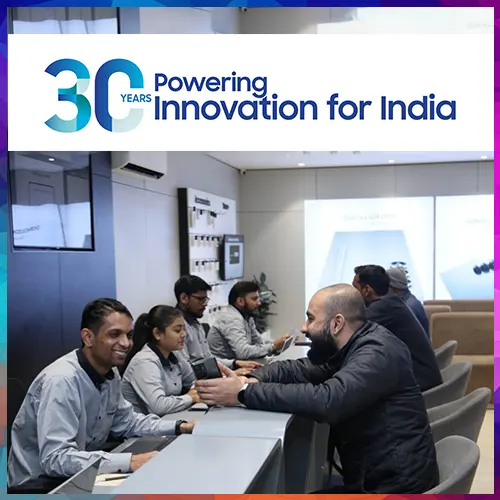
Samsung has completed 30 years of customer service operations in India, highlighting the transformation of its support network from a small service setup in Delhi during the mid-1990s into one of the country’s largest technology-enabled customer care ecosystems. The company said its service journey has evolved alongside India’s own digital transformation, moving from manual complaint handling systems to AI-powered connected support experiences.
From manual registers to digitally connected support
When Samsung established its first service centre in India in March 1996, customer support processes were largely dependent on physical service visits and handwritten complaint records. Telephone and internet access remained limited in many parts of the country, making in-person interactions a central part of customer service operations.
“Back then, customer care was deeply personal in the most literal sense. Customers often walked directly into service centres because telephones were not common in homes. Service requests were manually entered into registers, and engineers travelled across cities carrying logbooks, paper slips and toolkits,” said Rajiv Gupta, Director, Service Operations, Samsung India.
By the end of 1996, the company had expanded to 21 service centres nationwide. In 1997, Samsung engineers began using pagers to receive customer alerts, marking one of the earliest technology-led changes in its service operations. Over the following years, the company continued expanding its support infrastructure through franchise service centres and eventually launched its first in-house call centre in Delhi’s Nehru Place in 2003, along with a toll-free support number.
Today, Samsung operates more than 3,000 service touchpoints across India, supported by over 12,500 trained engineers and 16 parts warehouses located strategically around the country.
AI-enabled support and focus on accessibility
Samsung said its customer support ecosystem has now expanded beyond traditional service centres into connected and AI-enabled experiences. Through SmartThings-powered Home Appliances Remote Management (HRM), devices such as refrigerators and air conditioners can proactively detect potential performance issues and alert users before breakdowns occur.
The company also offers support through toll-free helplines, WhatsApp assistance, remote diagnostics, online appointment booking, and smartphone pick-up and drop services. Voice support is currently available in 10 Indian languages to improve accessibility for customers across regions. AI-driven tools such as intelligent co-pilots, speech-to-text systems, and sentiment analysis are also helping service teams improve response quality and efficiency.
“What truly defines Samsung’s customer service journey is how closely it has evolved alongside the lives of Indian consumers,” said Sunil Cutinha, Head, Customer Satisfaction, Samsung India.
“For us, customer service is not just a support function — it is a core part of the Samsung experience. Over the years, we have built a service ecosystem that combines scale, innovation and empathy. Whether through our extensive service network, contactless offerings like pick-up and drop, or next-generation service centres, our focus remains on delivering fast, transparent and reliable service that customers can trust every day,” he added.
The company has also focused on skill development through its Samsung Dost Service initiative and partnerships with ITIs, while integrating sustainability into its service operations through e-waste recycling and responsible disposal programmes.

See What’s Next in Tech With the Fast Forward Newsletter







Tweets From @varindiamag
Nothing to see here - yet
When they Tweet, their Tweets will show up here.