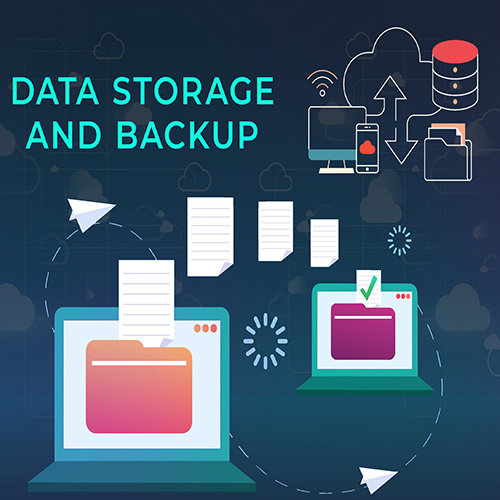
Businesses are facing an unparalleled data explosion in the hyperconnected era, necessitating the urgent need for sophisticated storage and backup solutions. Leaders in the field offer insights into how businesses are adjusting to the difficulties brought on by the exponential increase in data as the digital world changes. In this context industry leaders wull examine the dynamic realm of data storage and backup solutions, including everything from cutting-edge technologies meeting urgent storage demands to resilient tactics handling changing security problems. Come along on a journey via the viewpoints of influential industry players as they illuminate the breakthroughs, resilience, and risks influencing the direction of data management in the hyperconnected world of today.
Adapting to Data Explosion
 Ganesan Arumugam, Director, Channel Sales, NetApp India, emphasizes the need for adaptable infrastructure to navigate the data surge. Businesses are not only reacting to the data growth but are proactively aligning data strategies with operational goals. Strategic partnerships and investments in cybersecurity mechanisms play a pivotal role in fostering resilient ecosystems capable of managing vast volumes of information.
Ganesan says, “Businesses are navigating a data surge in today's hyperconnected landscape by reimagining storage and backup solutions. The exponential growth of data is demanding scalable, secure, and agile systems. Companies are prioritising adaptable infrastructure, leveraging cloud-based and hybrid models to meet evolving needs while optimising costs. Innovation is thriving as businesses embrace AI-driven analytics to derive actionable insights from vast datasets. Cybersecurity is becoming paramount, prompting investments in robust protection mechanisms against threats. Moreover, strategic partnerships are forming to foster resilient ecosystems capable of managing the sheer volume of information. Amid this surge, businesses are embracing a proactive stance, aligning data strategies with operational goals, and are capitalising on advanced technologies to not only meet but anticipate the increasing demand for storage and backup solutions.”
 Anil Nama, CIO, CtrlS Datacenters, points out, "Cloud storage and backup solutions have emerged as transformative tools that outshine traditional storage methods by offering an array of benefits. They enable businesses to protect critical information while enjoying the convenience of seamless accessibility from any location. Traditional storage systems often restrict data access to specific physical locations. Cloud storage solutions break these limitations, providing seamless data access from any internet-connected device. This fosters collaboration, file sharing, and remote work, promoting productivity and agility.
Businesses are increasingly embracing advanced data management and analytics tools to derive actionable insights from the vast datasets at their disposal. Artificial intelligence and machine learning are harnessed to go through massive data sets, identifying patterns and trends that help in strategic decision-making. This not only optimizes operations but also opens new avenues for innovation and customer-centric solutions. The integration of edge computing is another facet of adaptation. By decentralizing data processing and storage, businesses can reduce latency and enhance the efficiency of real-time applications, crucial in IoT and autonomous systems.”
 Sameer Bhatia, Director of Asia Pacific Consumer Business Group, Seagate Technology, highlights the challenge of data growth outpacing storage capacity. He notes, "With 30ZB of data created yearly, there’s only 2ZB storage capacity built each year, an astonishing gap. There is simply not enough storage capacity to harness the power of data for AI and analytics. To store enormous data sets, businesses are looking to scale storage capacity while optimizing total cost of ownership (TCO), power, and space consumption. Often, costs and physical data centre space are obstacles to addressing the data growth. Capacity often needs to be added without increasing the power footprint – municipality restrictions on available electric power leave big data centre operators with having to get more out of the existing data centres.
Businesses are also adopting a hybrid approach of storing data on-premises and in the cloud, with 90% of the world’s cloud exabytes stored on hard drives. That way, mass data management can be resilient and extensible to operationalize use cases for AI and ML. The solution to that is a tightly integrated portfolio of mass capacity drives, storage systems, and edge-to-cloud storage platform.
Seagate’s high-density storage systems, also enabled by areal density advancements, are enabling digital transformations in companies by seamlessly boosting their on-prem, hybrid, and multicloud strategies. A high-performance, self-healing block storage system like CORVAULT can deliver multi-petabyte capacity, five-nine availability, and hyperscale efficiencies for data centre and macro edge environments.”
 Kamal Kashyap, Director, India - Storage Business Unit, HPE India, emphasizes the shift to a data-centric mindset for successful digital transformation. He says, "To accelerate data-first modernization goals, businesses need to harness and manage the data efficiently and securely to drive business productivity and decision-making. At the same time, they need to address new data threats and find ways to advance data management capabilities across the hybrid cloud. This is what makes simplifying data management so critical to today’s modern data-first businesses.
Successful digital transformation requires modernizing technology and processes. It demands a shift to a data-centric mindset where data is the key driver of value creation and organizing principles for business success. To advance as a data-first business, organizations must eliminate what slows them down management complexity, storage silos, scale-out limitations, and constant firefighting. An intuitive cloud experience for all workloads across hybrid cloud can be a game changer for the transformation goals of businesses. This requires streamlining access to the data innovators, protecting data against any threat, and mobilizing data to accelerate apps and insights - and doing it wherever the data lives, from edge to cloud.”
 Akhtar Ali, VP, IBM India Systems Development Lab & Technical Computing Development, discusses the pivotal role of data in AI-led enterprises. He notes, "Business Data is the crown jewel of any organization which is witnessing an exponential growth. Analysts such as IDC predict that the combined global data volume will reach 175 zettabytes by 2025. This growth, in our hyper-connected world, encompasses both structured and unstructured data, with the latter dominating the scale.
Data plays a pivotal role in the domain of Artificial Intelligence (AI). As AI takes a central role in enterprise strategy, effectively managing the continually expanding data landscape has become increasingly vital. To address this surge in data, enterprises are embracing hybrid cloud data solutions that utilize bothon-premise and cloud storage, providing a flexible and efficient approach which includes the ability to orchestrate data between the two. This drives the rise in the adoption of scalable hybrid cloud storage solutions tailored to meet specific business Service Level Agreements (SLAs), driven by the imperative for cyber-resilient data backup.”
 Ripu Bajwa, Director Sales & General Manager - Data Protection Solutions, Dell Technologies, points out the growing challenges around data recovery in a distributed environment. He states, "Data is becoming increasingly distributed in India which adds to the challenges around data recovery. There is a need for backup and recovery solutions that can solve the growing number of data management challenges and give customers more control over their data. According to the Dell Technologies 2023 Innovation Index report, currently only 48% of Indian businesses are using a cyber recovery vault and a similar fraction of Indian IT decision-makers conduct an audit of users, devices, assets, cloud services, etc., to understand the full scope of what needs to be protected. This scenario needs to change if Indian businesses want to progress in the digital era. The aim must be to protect business-critical data while reducing cost and the complexities associated with data management through easy-to-use tools, centralized management, analysis and reporting. Organizations must ensure that their data protection infrastructure supports these technologies and are capable of managing the large volume of data generated.”
 On this context Khalid Wani, Senior Director - Sales, India, Western Digital comments, “Businesses are adapting to the surge in data and increased demand for storage and backup solutions by leveraging robust and scalable data center solutions. Recognizing the need for reliable infrastructure, organizations are turning to colocation data centers, reflecting a preference for cost-effective alternatives. The Indian colocation market is poised to reach $1.4 billion by 2025, growing at a CAGR of 16%.
Additionally, businesses are strategically deploying new edge data centers to bring storage closer to end-users. This approach addresses the demand for more distributed data centers, with a focus on Tier 2 and Tier 3 cities. Global industry leaders are actively exploring locations such as Pune, Ahmedabad, Jaipur, and Coimbatore, acknowledging the potential of smaller data centers, typically below 5 MW, to efficiently meet regional business requirements.”
Innovations in Data Storage and Backup Solutions
Innovation is at the forefront of addressing the pressing need for robust data storage and backup systems. Anil Nama of CtrlS Datacenters notes the emergence of quantum storage and new storage technologies like Object Storage, CEPH Storage, and Out-of-Band Archiving, capable of handling multiple exabytes of data. He also says, “Increasing use of Artificial Intelligence (AI) is optimizing data management and capacity. AI algorithms analyse patterns, predict storage needs, and optimize data placement, enhancing storage resource utilization. This not only improves storage efficiency but also enables proactive identification of potential issues and optimization of backup processes.
Additionally, edge computing is transforming the landscape by decentralizing data processing and storage closer to the source of data generation. This minimizes latency and enhances the efficiency of data backup systems, especially in scenarios where real-time data processing is critical.”
Sameer Bhatia of Seagate Technology highlights areal density innovation through HAMR technology, providing higher storage capacity within the same disk space. Seagate is focused on delivering high-capacity storage solutions to support data-intensive needs, especially for hyperscalers and data center providers.
“At Seagate, we are meeting these evolving storage demands through our leadership in areal density innovations. We are focused on delivering high-capacity storage solutions, shippingHAMR drives in volume with a current range of 3+TB-per-platter, 30+TB drives, and will soon introduce 5+TB-per-platter with 50+TB drives. These advancements are crucial for supporting the data-intensive needs of businesses, particularly hyperscalers and data centre providers, to supportAI applications, ensuring efficient, cost-effective, and sustainable storage solutions”, says Sameer.
Kamal Kashyap of HPE India discusses the importance of modular, disaggregated multiprotocol storage architecture and data fabrics technology to provide scalability and adaptability. HPE's storage solutions aim to unify cloud services and provide a cloud operational experience.
As per Kamal, “HPE offers a comprehensive solution that encompasses storing, managing, and safeguarding data across the hybrid cloud. These solutions, available both as a service and as part of their edge-to-cloud platform, aim to expedite data-first modernization, transforming data protection, powering private cloud and edge systems, and unlocking the inherent value within data assets.”
Akhtar Ali of IBM India emphasizes the need for scalable hybrid cloud storage solutions tailored to meet specific SLAs. He notes the importance of cyber-resilient storage systems with built-in capabilities such as AI-driven threat detection, immutable snapshots, and end-to-end encryption. Consequently, data storage and backup systems must now be fortified against cyber threats. Notably, there is visible innovation in this realm, with storage and backup systems evolving to become cyber-safe. This transformation is facilitated through built-in capabilities such as AI-driven threat detection in storage systems, the use of immutable snapshots and backups, rapid secure recovery of backup data defining minimal viable company, end-to-end encryption, and security change management of data and systems facilitated by AIOps-enabled observability.
Ganesan Arumugam from NetApp points out, “Edge computing is enabling real-time processing and storage closer to data sources, reducing latency. Hybrid and multi-cloud architectures are providing versatility, enabling seamless data movement while balancing performance and cost. These innovations collectively redefine storage paradigms, empowering businesses to navigate the data surge with resilience and efficiency.”
Ripu Bajwa of Dell Technologies discusses emerging technologies such as Security Orchestration Automation and Response (SOAR), Single Sign-On (SSO), and Multi-Factor Authentication (MFA) to enhance data security. Dell Technologies makes it easy to implement powerful tools for backup, recovery, data archiving and data replication that can help to protect business-critical data, improve uptime and ensure data availability. Dell Technologies’ suites of SaaS-based Apex Backup Services also offer end-to-end scalable, secure data protection with centralized monitoring and management for SaaS applications, endpoints and hybrid workloads.
Western Digital continues to play a critical role in delivering massive capacity, performance and reliability. Khalid Wani from Western Digital attributes, “Our enterprise-class hard disk drives (HDDs) remain critical for helping data center customers design more cost-efficient, scalable and sustainable infrastructure. We leverage numerous technology innovations like ePMR, OptiNAND, and UltraSMR to deliver predictable capacity growth in scalable, highly reliable products. Recently, we have also started shipping our new 10-disk 24TB1 CMR HDD family for hyperscale, cloud and enterprise data center customers. This new generation of drives is built on a proven platform with technology innovations specifically designed for data center customers who are consistently looking for the highest capacity storage to help them achieve the lowest possible total cost of ownership (TCO).
We also have a portfolio of high-performance SSD devices that can access, read, and write datasets with ultra-low latency so you can respond rather than react to changing needs. Powered by NVMe, enterprise solid state drives (eSSDs) can help accelerate data center workloads, achieve maximum throughput, and transform your data into actionable insights for your whole team. Innovative technologies in NAND scaling, QLC (quad-level cell) flash memory, and NVMe have enhanced performance across our portfolio. Out Ultrastar DC SN655 NVMe SSD (Solid State Drives) offers high-capacity, read-intensive performance for data-intensive applications. With dual-port redundancy and failover capability, end-to-end data protection and additional enterprise features, this enterprise-class SSD helps ensure that data is secure and available when needed.”
Addressing Evolving Security Challenges
Ensuring the security of data storage and backup systems is paramount in the face of evolving cyber threats. Ganesan Arumugam of NetApp India highlights the multifaceted approach adopted by companies, including encryption, access controls, robust authentication protocols, continuous monitoring, AI-driven threat detection, and disaster recovery plans.
“Companies are facing evolving security challenges in data storage and backup through multifaceted strategies. Encryption remains a fundamental shield, safeguarding data at rest and in transit. Access controls and robust authentication protocols are ensuring limited and authorized entry points, reducing vulnerability. Continuous monitoring and AI-driven threat detection proactively identify anomalies or potential breaches. Data governance frameworks enforce compliance, mitigating human error risks. Disaster recovery and redundancy plans provide fail-safes against potential breaches.
NetApp's Ransomware Recovery Guarantee, for instance, advances measures against ransomware attacks. Leveraging ONTAP's unique security features, it automatically blocks malicious file types, verifies administrators, and secures tamper-proof snapshots. During a ransomware attack, ONTAP's protection detects threats, takes snapshots, and facilitates rapid recovery. This comprehensive approach, integrating technology and stringent protocols, fortifies companies against dynamic data security challenges”, points out Ganesan.
Anil Nama of CtrlS Datacenters emphasizes the importance of data segmentation, classification policies, and routine security audits to identify vulnerabilities and ensure compliance. CtrlS Datacenters leverages a comprehensive approach, integrating technology and stringent protocols, to fortify against dynamic data security challenges.
“By categorizing data based on its level of sensitivity, organizations can tailor security protocols to match specific requirements. This segmentation includes designations such as public, private, and sensitive, each demanding a tailored security approach aligned with regulatory, contractual, or internal policy obligations. Routine security audits also help companies in identifying vulnerabilities and ensuring compliance with industry standards and regulations. This proactive measure allows organizations to stay ahead of emerging threats, continually adjusting security protocols to address new challenges and vulnerabilities that may arise in the dynamic cybersecurity landscape.
At CtrlS, we maintain the utmost security and compliance standards for safeguarding clients' sensitive data through the utilization of its Rated 4 datacenters. To ensure the resilience of our datacenters, a thorough evaluation of various parameters is conducted. This evaluation covers an examination of the datacenter's design, engineering specifications, historical data on natural calamities, cabling infrastructure, and greenhouse gas emissions. Furthermore, our Remote Infrastructure Management Services play a crucial role in monitoring, managing, and maintaining an organization's IT infrastructure from a remote location”, emphasizes Anil.
Sameer Bhatia of Seagate Technology discusses Seagate's Ransomware Recovery Guarantee, which automatically blocks malicious file types, verifies administrators, and secures tamper-proof snapshots. This comprehensive approach integrates technology and stringent protocols to fortify against dynamic data security challenges.
He feels, “To safeguard confidential data, choose storage systems that encrypt both data at rest and in motion. Data masking and redaction methods can also help conceal and obscure sensitive data when users without permission access it. Data backups must equally be encrypted to protect against data breaches if backups are stolen or loss. Strong access controls and authentication processes are, furthermore, the crux of ensuring only authorized personnel can access and modify stored data. Secure data disposal practices, such as data erasure or destruction methods, must in place for decommissioned storage hardware to avoid leakage. A strong data security plan alone is not enough. Companies’ approach to security that aligns with compliance, following best practices, and adhering to legal requirements, sets up the foundation for a resilient and responsible data strategy.”
Kamal Kashyap of HPE India underscores the need for a cyber-resilient security posture, seamless integration with the broader IT security ecosystem, and solutions that address security challenges in highly distributed edge-to-cloud environments. On this context, Kamal says, “Hybrid cloud setups add complexity; thus, reimagining security approaches becomes necessary. Managing data across on-premises centers, hybrid cloud services, and edge workforces demands a new security paradigm.
From a data storage and backup perspective, HPE provides solutions that cater to protecting and recovering data across the hybrid cloud, avoiding downtime, and providing resiliency and recovering from ransomware in minutes. HPE GreenLake for Disaster Recovery (DR) provides continuous Data Protection using Zerto-based solutions delivering a SaaS-based DR with global management and flexible billing options and provides Backup-as-a-Service to protect your on-prem and cloud-native workloads with automated and effortless protection across hybrid cloud, unmatched storage efficiency, industry-leading security against threats ransomware.”
Akhtar Ali of IBM India emphasizes the integration of backup and storage management solutions for comprehensive data resilience. He notes the importance of next-generation solutions facilitating SLA-compliant business recovery and complete company restoration following infrastructure failures, natural disasters, or cyberattacks. “The ideal solution should exhibit outstanding scalability, extensive application support, cost-effective data reduction technologies, adaptable data retention on tape, and immutable object storage. It should incorporate multiple layers of cyber resilience with built-in automation to expedite the secure recovery of critical workloads. The adoption of such hybrid cloud cyber-resilient data storage and backup solution will fortify deployments, manage risk and safeguard the organization's most critical asset its data”, comments Akhtar.
Ripu Bajwa of Dell Technologies discusses the significance of a prevention-first mindset, extra layers of authentication, data lifecycle management processes, regular security and password audits, and eliminating distributed storage systems to enhance data security. He says, “Managing data backup and recovery in the current complex IT landscape is extremely difficult for organizations of any size, without any support. The first step to ensure resilience from cyberthreats starts with the understanding of protecting critical data. Loss of critical data after a cyber attack can cripple a business in no time. With a data back-up strategy that is rooted in a prevention-first mindset, Indian businesses will be better protected.”
Conclusion
In the fast-evolving world of data storage and backup solutions, businesses face both challenges and opportunities. The exponential growth in data necessitates innovative technologies, scalable solutions, and robust security measures. From cloud-based storage to quantum storage, AI-driven threat detection to cyber-resilient storage systems, industry leaders are at the forefront of addressing these challenges, ensuring businesses can not only adapt to the data surge but thrive in the hyperconnected landscape.As technology continues to advance, the resilience of data storage and backup solutions will remain critical for businesses to safeguard their most valuable asset data.

See What’s Next in Tech With the Fast Forward Newsletter



Tweets From @varindiamag
Nothing to see here - yet
When they Tweet, their Tweets will show up here.