Hikvision Unveils Millimeter Wave Body Scanning System for Threat Detection at Security Checkpoints
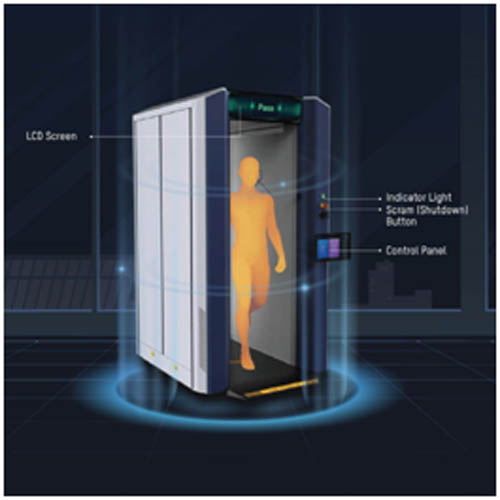
Hikvision has unveiled a new millimeter wave (mmWave) body scanning security system for deployment at security checkpoints, aimed at addressing evolving threats through real-time detection and management. With security risks becoming more complex, the company highlighted the growing importance of advanced technologies such as millimeter wave scanners in strengthening safety frameworks across public and private spaces.
The newly introduced system is designed to deliver a fast, reliable, and user-friendly screening process. Hikvision said the solution enhances the effectiveness and efficiency of security measures while offering a robust layer of protection for personal safety, public infrastructure, and private property. The integration of such technology into organizational security strategies is seen as a critical step toward building safer environments.
MILLIMETER WAVE BODY SCANNER
A millimeter wave body scanner is used at security checkpoints to detect objects such as metal, plastic, ceramic, and similar materials concealed on individuals. The term “millimeter wave” refers to radio waves in the 30 to 300 GHz frequency range, positioned between microwave and infrared waves in the electromagnetic spectrum.
These wavelengths enable deep scanning through clothing to identify hidden objects.
Hikvision’s system provides high-resolution imaging and uses a dummy body model instead of real images to indicate threat locations, ensuring privacy protection. This approach allows security personnel to focus only on suspicious objects, improving both speed and accuracy in screening processes.
WORKING PRINCIPLE AND DETECTION CAPABILITIES
The system operates by transmitting high-frequency electromagnetic waves toward the human body and analyzing the reflected signals.
These reflections are processed using specialized software to generate images and identify abnormal or potentially dangerous objects.
Millimeter wave scanners function passively, relying solely on reflected waves and avoiding the use of ionizing radiation such as X-rays. The technology supports high-resolution detection, enabling precise identification of object size and location, while scan times are typically completed within seconds—an advantage in high-traffic areas.
The system can detect a wide range of items, including metal objects like weapons, non-metal objects such as explosives or plastic devices, as well as other prohibited items including electronic devices, making it suitable for diverse security scenarios.

See What’s Next in Tech With the Fast Forward Newsletter







Tweets From @varindiamag
Nothing to see here - yet
When they Tweet, their Tweets will show up here.