Technological innovation and market variability are accelerating product replacement cycles, placing increasing pressure on traditional logistics systems. Conventional warehouse and production models are struggling to meet demands for speed, accuracy, and transparency. In this environment, intelligent and flexible mobile robot solutions are emerging as a key enabler, helping enterprises reduce operational costs while improving efficiency and scalability.
INTELLIGENT ROBOTICS AND MACHINE VISION SOLUTIONS
Hikrobot is driving a significant transformation in manufacturing through advanced machine vision and robotics technologies. Its portfolio includes smart cameras, autonomous mobile robots (AMRs), and AI-powered code readers designed to enhance productivity across electronics, automotive, pharmaceuticals, and logistics sectors. However, modern manufacturing environments face multiple challenges. SKU diversity and small product sizes often lead to picking errors. In addition, complex intralogistics processes require advanced systems for quality inspection, serial number tracking, warranty management, and inventory control. Cross-floor material transfer further increases operational complexity and slows workflows.
INTEGRATED AUTOMATION AND SYSTEM ARCHITECTURE
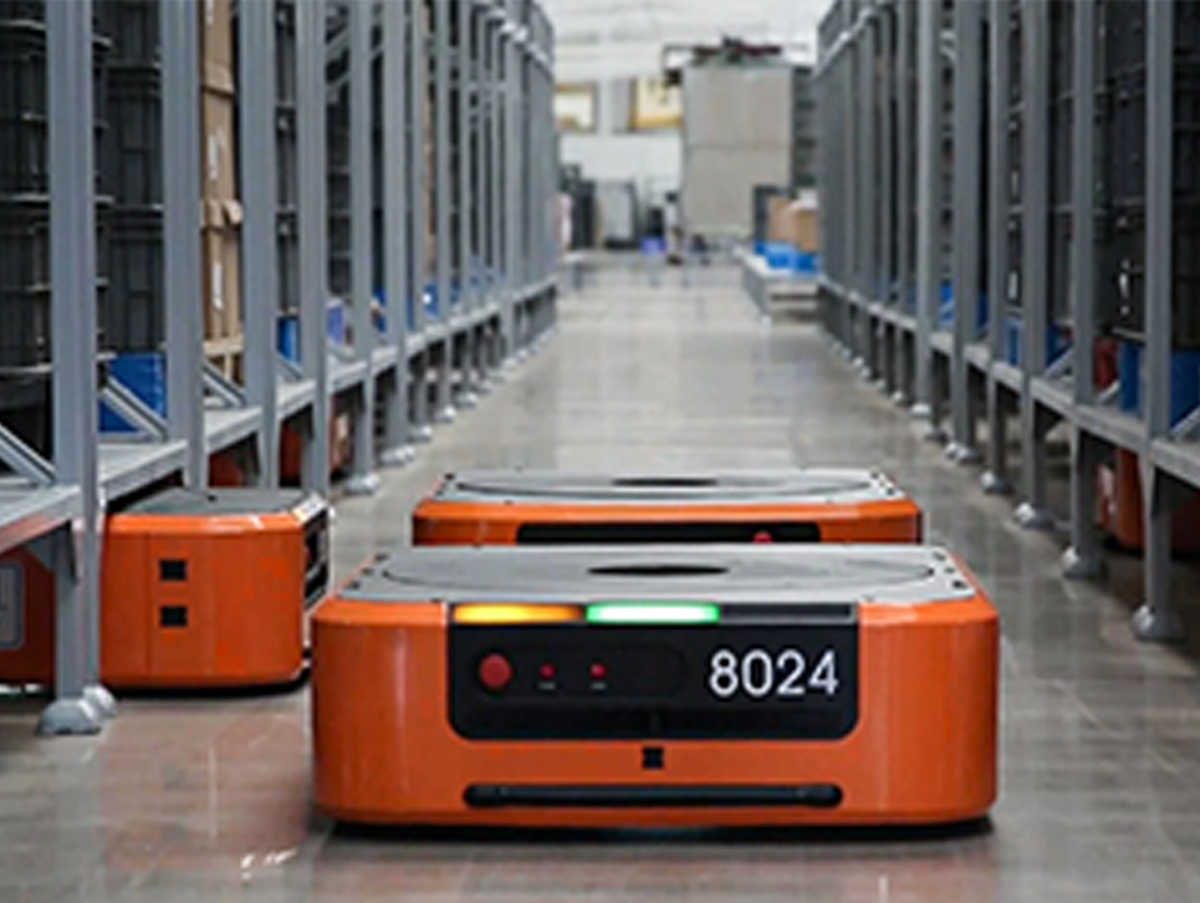
To address these challenges, Hikrobot adopts a Goods-to-Person (G2P) model using multiple mobile robot types for flexible transport operations, reducing dependence on skilled manual labour while increasing automation. The Warehouse Control System (WCS) integrates with elevators, air showers, and other infrastructure, while the Intelligent Warehouse Management System (iWMS) connects seamlessly with MES, ERP, WMS, and OMS platforms. This enables coordinated inspection processes and optimised transfer strategies. The robotics suite includes AMRs for logistics movement, Forklift Mobile Robots (FMRs) for pallet handling, and Latent Mobile Robots (LMRs) for low-floor environments. The RCS 2000 robotic control system enhances efficiency through intelligent task scheduling, multi-robot coordination, AI-based dispatching, and integration with PLCs and automated doors.
INDUSTRIAL DEPLOYMENT AND BENEFITS
In a compressor manufacturing facility producing 15 million units annually, around 140 robots were deployed, integrated with RCS and iWMS systems. The deployment enabled automated cross-floor logistics and intelligent inventory management. Results included improved efficiency, over 7,000 daily carrying tasks, elimination of more than 300 km of manual movement per day, partitioned material storage, and fully digitalised inventory tracking—significantly improving operational precision and scalability.

See What’s Next in Tech With the Fast Forward Newsletter







Tweets From @varindiamag
Nothing to see here - yet
When they Tweet, their Tweets will show up here.