Channel leaders discuss how legacy modernisation, measurable AI outcomes, and Zero Trust security are helping enterprises navigate the challenges of an increasingly AI-driven world.
Artificial intelligence is no longer a futuristic concept or a technology confined to pilot projects. Across industries, organisations are increasingly looking to AI as a strategic enabler of growth, efficiency, innovation, and competitive advantage. However, as enterprises move from experimentation to large-scale deployment, the path to successful AI adoption is proving far more complex than simply implementing new tools or platforms. Legacy infrastructure, fragmented data environments, mounting technical debt, and rapidly evolving cybersecurity threats continue to present significant challenges, forcing organisations to rethink their technology strategies from the ground up.
For India's channel partners, this shift marks a pivotal moment. The traditional role of delivering hardware and software solutions is rapidly evolving into one that demands deeper business understanding, consulting expertise, and the ability to guide customers through complex digital transformation journeys. Enterprises today are looking for trusted partners who can help modernise legacy environments, create AI-ready infrastructure, ensure security and compliance, and deliver measurable business outcomes from technology investments.
One of the most pressing challenges facing organisations is the burden of technical debt accumulated over years of operating legacy systems, siloed applications, and disconnected data environments. Many enterprises recognise the potential of AI but struggle to realise its benefits because their existing infrastructure lacks the scalability, interoperability, and data accessibility required to support modern AI workloads. As a result, infrastructure modernisation and cloud readiness have become critical priorities for organisations seeking to unlock the full value of AI.
At the same time, business leaders and CIOs are under increasing pressure to justify AI investments through tangible and measurable outcomes. The conversation has moved beyond experimentation and proof-of-concept projects to questions around productivity improvements, operational efficiency, cost optimisation, faster decision-making, enhanced customer experiences, and overall business impact. Demonstrating clear return on investment has become essential for securing stakeholder confidence and scaling AI initiatives across the enterprise.
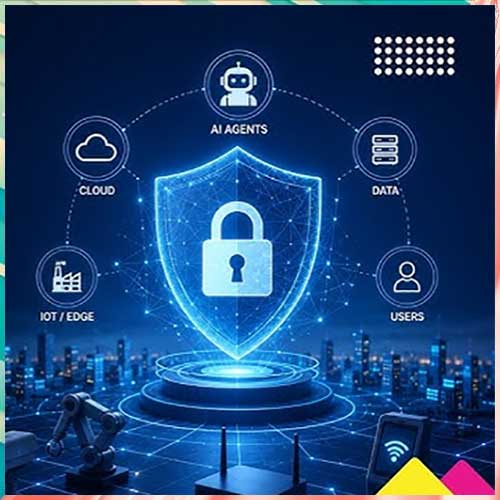
Adding another layer of complexity is the rise of AI-powered cyber threats. As attackers leverage artificial intelligence to automate and enhance their tactics, traditional security models are becoming increasingly inadequate. This has accelerated the adoption of Zero Trust architectures, identity verification frameworks, continuous authentication mechanisms, and AI-driven threat detection capabilities, with security now being embedded into the foundation of digital transformation strategies rather than treated as an afterthought.
Against this backdrop, VARINDIA engaged with leading channel partners, particularly system integrators and technology solution providers, to understand how they are helping customers navigate this rapidly evolving landscape. Their insights centre on three critical priorities: reducing technical debt and modernising legacy systems to enable advanced AI adoption; demonstrating measurable business outcomes and return on investment from AI initiatives; and integrating Zero Trust and identity-centric security frameworks to counter increasingly sophisticated AI-driven cyber threats. Together, their perspectives provide a comprehensive view of how India's channel ecosystem is evolving to meet the demands of an AI-driven future.
-----------------------------------------------------------------------------------------------------------------------------------------
 AMARDEEP SHARMA
----------------------------------------------------------------------------------------------------------------------------------------
Modernising legacy infrastructure for secure and scalable AI adoption
 GURPREET SINGH
FOUNDER & MD, ARROW PC NETWORK PVT. LTD.
“At Arrow PC Network, we see tech debt as one of the biggest barriers to meaningful AI adoption. Many organisations want to move fast, but their existing systems are not always ready. Our approach is to modernise in phases, starting with infrastructure assessment, workload rationalisation, and integration planning. We are also helping enterprises upgrade into modern IT through the IT Recycling Program by Arrow PC Network, enabling customers to unlock value from existing IT assets while moving toward scalable, secure, and AI-ready architectures without disrupting business continuity.
CIOs today are looking for clear business impact, not just technology promises. We demonstrate AI ROI through measurable outcomes such as improved productivity, faster decision-making, reduced manual effort, better resource utilisation, and stronger operational efficiency. We also track improvements in response time, automation levels, and infrastructure performance. For us, AI must show value in practical terms, whether that is lowering operating effort, improving service delivery, or helping teams work smarter and faster. That is how trust is built with cost-conscious decision-makers.
AI-led threats require a security model that assumes risk at every layer. That is why Zero Trust and identity verification are central to our approach. We focus on strong access control, continuous authentication, least-privilege access, and identity-aware security policies to help organisations protect users, devices, data, and applications more effectively. At Arrow PC Network, we believe security must be embedded by design, not added later.”
-----------------------------------------------------------------------------------------------------------------------------------------
Reducing tech debt for AI-ready telecom and IT transformation
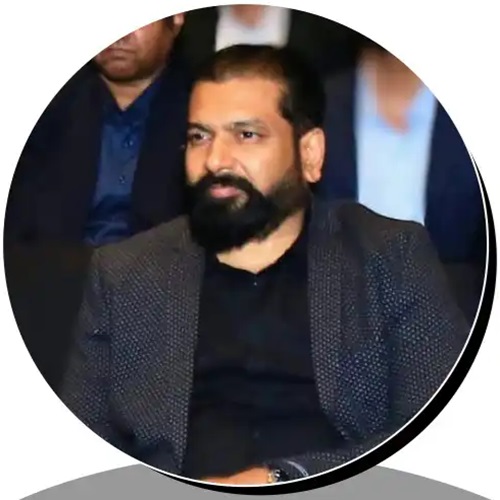 JIGAR SANGHVI
DIRECTOR, SANGHVI INFOTECH PVT. LTD.
“At Sanghvi Infotech, we help clients reduce tech debt by modernising legacy telecom and IT environments into secure, scalable, and AI-ready platforms. Our system integration approach connects networks, Wi- Fi, cloud, cybersecurity, and digital infrastructure to eliminate silos, improve efficiency, and create the technological foundation needed for advanced AI-driven innovation. In telecom, ISP, and managed Wi-Fi environments, tech debt often appears as siloed networks, ageing infrastructure, poor visibility, manual operations, and systems that do not share data well.
We address this by consolidating networks, modernising core infrastructure, improving interoperability, and building resilient architectures using managed Wi-Fi, SD-WAN, VPNs, cloud-based networking, edge services, and enterprise system integration. We demonstrate AI ROI through measurable outcomes such as lower operating costs, faster process turnaround, reduced manual effort, improved network and system uptime, better service response times, and stronger decision-making through real-time data visibility. For cost-conscious CIOs, we focus on business metrics that matter most, including productivity gains, error reduction, automation-led savings, and the speed at which AI use cases move from pilot to scalable business value.
We embed Zero Trust and identity verification frameworks into our core solutions so that every user, device, application, and network request is continuously verified before access is granted. By combining strict identity controls, least-privilege access, segmentation, and real-time monitoring, we help clients build resilient digital environments to counter AI-led cyber threats.”
-------------------------------------------------------------------------------------------------------------------------------------------
Building secure and scalable digital infrastructure for AI-driven transformation
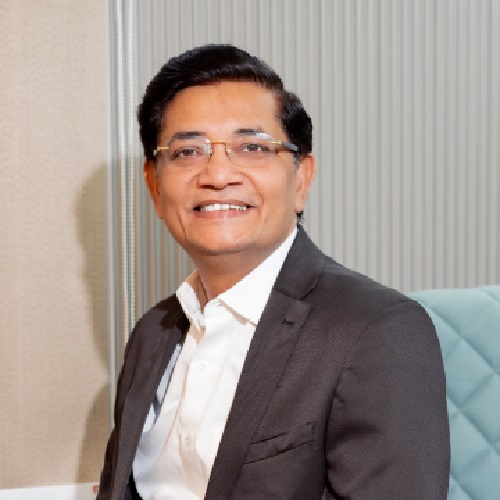 KUMAR BACHCHAN
MD & CEO, NIVESHAN TECHNOLOGIES INDIA PVT. LTD.
“At Niveshan Technologies, we believe AI adoption must begin with secure and scalable digital infrastructure. Many enterprises and PSUs still operate fragmented legacy environments that limit automation and operational efficiency. Our focus is therefore on infrastructure modernisation through cloud-ready platforms, cybersecurity strengthening, SD-WAN, and integrated data centre transformation. Projects delivered for organisations across railways, petroleum, telecom, and BFSI have helped create resilient digital ecosystems capable of supporting future AI-driven operations.
We see AI as the next layer of transformation, enabling predictive monitoring, intelligent automation, and operational analytics on top of strong infrastructure foundations. Our AI strategy is focused on measurable business outcomes rather than experimentation alone. Since we already manage mission-critical environments
across smart cities, telecom, transport, BFSI, healthcare, and PSU sectors, we view AI as a capability that enhances efficiency and resilience across existing infrastructure investments. Key performance indicators include reduced downtime, faster incident response, lower operational overhead through automation, improved SLA compliance, enhanced cybersecurity visibility, and better infrastructure utilisation.
Cybersecurity is being strengthened through Zero Trust and identity-centric security frameworks designed for hybrid and mission- critical environments. Our approach includes MFA, IAM, PAM, SOC-led monitoring, endpoint verification, micro-segmentation, and secure SD-WAN architectures. Building on our experience across telecom, smart cities, healthcare, transport, and government infrastructure, we see AI-enhanced cybersecurity capabilities such as anomaly detection and intelligent threat analytics further improving cyber resilience and secure digital transformation.”
------------------------------------------------------------------------------------------------------------------------------------------
Supporting enterprise AI adoption through infrastructure modernisation
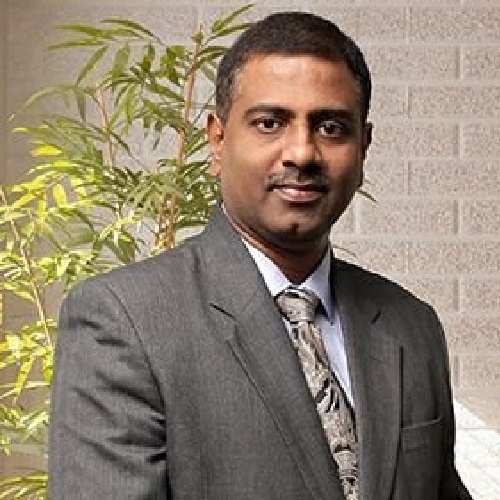 L ASHOK
MD, FUTURENET TECHNOLOGIES (INDIA) PVT. LTD.
“As of now, at Futurenet Technologies, we advise and consult on AI migration and the setup of AI infrastructure both on-premises and in the cloud. Our focus is on helping organisations modernise infrastructure environments to support advanced AI adoption. We believe enterprises must first establish the right AI infrastructure foundation before implementing AI initiatives. Through our consulting and advisory approach, we help customers identify suitable deployment models, infrastructure requirements, and implementation strategies.
AI investments largely justify themselves through enormous increases in productivity and significant reductions in cost. However, the key lies in identifying the right areas for implementation. This is addressed through our audit and advisory framework, which helps organisations evaluate where AI can deliver improved efficiency, better resource utilisation, and operational value. Our approach is focused on ensuring AI adoption remains practical and aligned with business requirements.
Our SIEM comes built in with AI-based pattern recognition and user behaviour analysis to strengthen threat detection and monitoring capabilities. Before SIEM implementation, we help customers thoroughly define processes and implement best practices in technology. The key is identifying the threat landscape and working proactively. We believe organisations must combine strong processes, security visibility, and proactive monitoring to counter evolving AI-led cyber threats more effectively.”
------------------------------------------------------------------------------------------------------------------------------------------
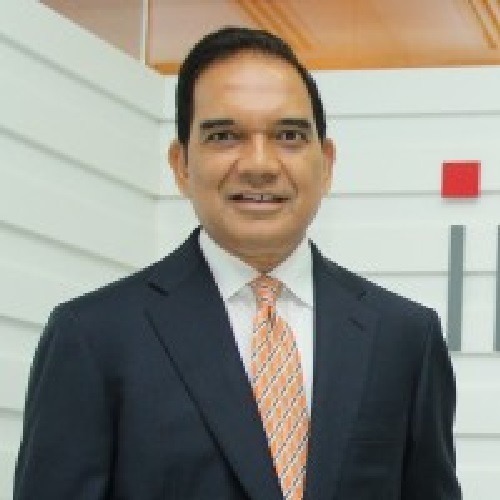 MUSTAFA LOTIA
-------------------------------------------------------------------------------------------------------------------------------------------
Enabling secure and sustainable AI adoption through infrastructure modernisation
 NEEL SHAH
CHAIRMAN, INSIGHT BUSINESS MACHINES PVT. LTD.
“At Insight Business Machines, I believe the biggest challenge in 2026 is not just adopting AI, but staying relevant while doing it securely, responsibly, and with clear business outcomes. Customers are moving beyond AI experimentation, while CIOs are under pressure to modernize legacy systems, improve resilience, control costs, and still drive innovation. Many organizations still run on fragmented infrastructure, disconnected security tools, and legacy applications not designed for AI-led environments, slowing decision-making and increasing operational complexity.
Through our ISMAC approach, which combines Infrastructure, Security, Mobility, AI/Automation, and Cloud, we help customers modernize in a phased manner. We focus on building strong foundations through hybrid cloud, observability, automation, identity governance, endpoint visibility, and data accessibility without disrupting business operations. Once stable and scalable, AI adoption becomes more effective and sustainable. CIOs today are highly outcome-focused, expecting measurable value such as lower downtime, faster incident response, better infrastructure utilization, reduced manual effort, and improved user experience. Customers also see faster detection and recovery cycles with stronger operational visibility, improving productivity, continuity, and decision-making.
Cybersecurity is central to every AI discussion as threats increasingly target identities, endpoints, and access layers. Security must be embedded from the start. Our approach combines Zero Trust principles, identity verification, privileged access management, endpoint visibility, continuous monitoring, observability, and integrated threat intelligence into a unified security framework. The goal is simple: help customers innovate with confidence while staying resilient against evolving cyber risks, ensuring relevance through trust, resilience, measurable outcomes, governance, and sustainability.”
----------------------------------------------------------------------------------------------------------------------------------------------
Trust and identity verification are becoming the foundation of secure AI adoption
 PRASHANT JAIN
FOUNDER & DIRECTOR, JNR MANAGEMENT RESOURCES PVT. LTD.
“Every AI initiative organisations want to pursue — agents, copilots, automated workflows, and predictive analytics — has a trust dependency. Data must be trusted, identities must be verified, models must be governed, and outputs must be auditable. Identity and trust of AI agents are most important. In many ways, tech debt is simply an accumulated trust deficit, and modernisation is what helps pay down that deficit while supporting advanced AI adoption.
The most credible AI ROI programs establish baseline metrics before rollout, control groups or phased adoption, quarterly measurement cadence, business-owner accountability, and a clear financial attribution methodology. Without baselines, AI ROI claims are often challenged by finance teams. For cost-conscious CIOs, measurable outcomes and operational accountability are critical in demonstrating the real business value of AI investments. AI adoption must therefore be backed by structured measurement frameworks rather than assumptions around productivity or efficiency gains alone.
AI-led threats are identity-first attacks, and Zero Trust is an identity-first defence. Every AI attack vector — phishing, credential stuffing, deepfakes, agent compromise, and session hijacking — targets identity. Zero Trust responds by making identity cryptographically verifiable, continuously validated, and dynamically enforced. Traditional security assumed users inside the network were trusted, whereas modern Zero Trust assumes every identity, device, workload, API call, and AI interaction could be compromised. That mindset shift is becoming the real foundation for defending against AI-driven cyber threats and building continuous trust across enterprise environments.”
-----------------------------------------------------------------------------------------------------------------------------------------
 PRASHANTH SUBRAMANIAN
-----------------------------------------------------------------------------------------------------------------------------------------
 RAJ KAMAL SINGHAL
---------------------------------------------------------------------------------------------------------------------------------------
 RANJAN CHOPRA
----------------------------------------------------------------------------------------------------------------------------------------
 SAI GOPAL
---------------------------------------------------------------------------------------------------------------------------------------
Helping customers reduce technical debt and build AI-ready, secure digital environments
 SAIRAMAN MUDALIAR
DIRECTOR, PENTAGON SYSTEM AND SERVICES PVT. LTD.
“At Pentagon, we are helping customers reduce technical debt by modernising legacy infrastructure through cloud adoption, scalable architectures and AI-ready environments. Many organisations today face challenges with fragmented systems and operational inefficiencies that slow down innovation. Our focus is on simplifying and integrating their IT ecosystem while ensuring flexibility, security and long-term scalability. This enables customers to build a stronger foundation for advanced AI adoption and future-ready digital transformation.
At the same time, CIOs are increasingly focused on measurable business outcomes rather than AI experimentation alone. We help customers evaluate AI investments through key metrics such as operational efficiency, automation impact, faster turnaround time, improved customer experience and cost optimisation.
Our approach is centred around practical AI use cases that solve real business challenges and deliver visible, long-term ROI. By focusing on outcomes that matter to the business, we help organisations realise the value of their AI investments while supporting long-term growth and transformation.
As AI-led cyber threats continue to evolve, security has become a core business priority. We are integrating Zero Trust principles, identity verification frameworks, proactive monitoring and security-first infrastructure into our solutions to strengthen customer resilience. With our growing investments in cybersecurity capabilities, including managed security solutions, we are focused on delivering secure-by- design environments that support both innovation and business continuity.”
---------------------------------------------------------------------------------------------------------------------------------------
Addressing tech debt through layered modernisation, AI-driven ROI and Zero Trust security
 SANJAY PATODIA
CEO & DIRECTOR, GALAXY OFFICE AUTOMATION PVT. LTD.
“We address infrastructure tech debt through a layered modernisation approach. Where necessary, we replace fragile legacy infrastructure with modern AI-ready, hyper-converged, software-defined data centres. Our AI Factory setup enables customers to try and benchmark solutions before purchasing infrastructure. Where justified, we execute structured cloud migrations with security built in from the outset and deploy proprietary AI-powered tools to continuously optimise infrastructure and cloud costs and performance. Our tools also help identify root causes of tech debt arising from software architectures not designed for today’s state-of-the-art infrastructure. On this modernised foundation, our AI practice delivers vertical-specific use cases across banking, healthcare, manufacturing and retail, supported by managed services, 24/7 support and quarterly roadmap reviews to prevent future debt accumulation.
Our philosophy is simple: unless an AI-based project can deliver on a CEO’s KPI, it is unlikely to succeed. We help organisations focus on measurable business outcomes such as reducing costs, increasing revenue, improving market share, mitigating risks and improving CSAT. We conduct data audits, assess governance and infrastructure costs, and validate outcomes through a proof-of-value exercise to directly map results to ROI. Our cybersecurity strategy is anchored in a Zero Trust architecture with Identity Verification at its core, enabling continuous authentication, least-privilege access and context-aware security. Supported by integrated OEM solutions across ZTNA, IAM, Endpoint Security, XDR, Data Protection and Cyber Resilience, and our AI-driven capabilities, we deliver predictive threat intelligence, behavioural analytics and automated response to ensure resilience against evolving cyber threats.”
--------------------------------------------------------------------------------------------------------------------------------------
 SANJIV KRISHEN
---------------------------------------------------------------------------------------------------------------------------------------
Transforming enterprise IT to enable AI-ready, secure and scalable infrastructure
 SAURIN SHAH,
MD, ASHTECH INFOTECH (INDIA) PVT. LTD.
“We help organisations reduce technical debt and modernise legacy environments by upgrading core IT infrastructure, including servers, storage, networking, GPU-enabled compute and cloud platforms. We also support the transition from traditional monolithic systems to modular, API-driven, cloud-native architectures. In addition, we build modern data platforms such as data lakes and streaming environments that support AI training, automation and advanced analytics workloads. This creates an AI-ready ecosystem that accelerates innovation while reducing long-term operational complexity and cost across enterprise environments.
We focus on measurable outcomes that directly align with business objectives. These include reducing infrastructure costs, lowering manual effort by 20–50% in repetitive processes, improving operational efficiency, and accelerating decision-making cycles. We also measure outcomes such as improved service levels, reduced errors, quicker issue resolution and stronger data-driven decisions. These metrics help CIOs clearly quantify business value and demonstrate both immediate cost optimisation and long-term growth benefits from AI investments across the organisation.
We integrate Zero Trust principles through a ‘never trust, always verify’ approach by implementing identity-based access controls, multi- factor authentication, least-privilege access and continuous monitoring. Security controls are embedded across infrastructure, applications and cloud environments to ensure users and systems are continuously validated in real time. This approach strengthens resilience against evolving AI-driven cyber threats while enabling secure, scalable and compliant digital transformation across the enterprise ecosystem.”
---------------------------------------------------------------------------------------------------------------------------------------
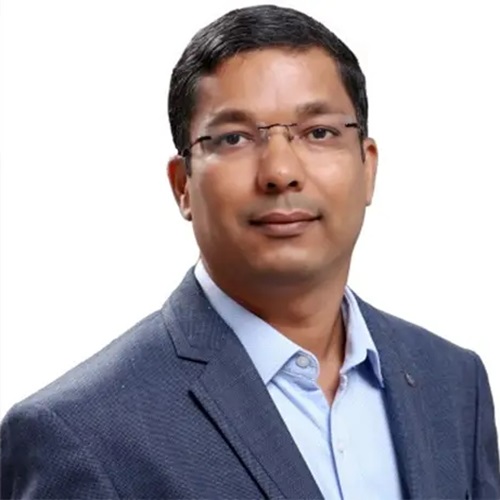 SUHAS DESAI
------------------------------------------------------------------------------------------------------------------------------------------
AI accountability comes through outcomes and security
 SURESH RAMANI
CEO, TECHGYAN
“We have moved from AI curiosity to AI accountability; experiments are easy, but outcomes that hold up in production are where the real work begins. Legacy is not disappearing anytime soon, and hybrid is reality. Our approach is straightforward: assess what stays, rationalise what doesn’t, and make the data usable. Incremental modernisation works—lift where it’s safe, refactor where it matters. However, AI will not fix broken processes; it will scale them, so the operating model has to change first to enable effective outcomes and ensure technology decisions are aligned to business decisions.
When evaluating AI, we do not talk features; we focus on outcomes and where impact will be seen. Typically, it starts small—faster service response, reduced manual effort, and better-qualified sales conversations. Nothing is dramatic overnight, but consistent improvements show up in cost-to-serve, cycle time, and employee productivity. Successful AI adoption is about proving business value quickly and at scale.
On risk, AI increases exposure, but the answer is not more tools; it is stronger identity. Identity is now the control plane as we move to MFA or passwordless, enforce least privilege, segment access, and continuously verify. We assume breach, monitor behaviour, and prepare response playbooks. Security is not a layer anymore; it is part of the design. Ultimately, if AI does not deliver outcomes, stop it; if it isn’t secure, don’t start it.”
--------------------------------------------------------------------------------------------------------------------------------------
Cutting tech debt, delivering AI outcomes and strengthening Zero Trust security
 TUSHAR PAREKH
MANAGING DIRECTOR, SILICON NETSECURE PVT LTD
“One of our key priorities has been helping clients simplify and modernise their existing IT environments before adopting advanced AI solutions. Many organisations still operate on fragmented legacy systems that create operational inefficiencies and security gaps. We work closely with customers to assess their infrastructure, consolidate workloads, migrate critical applications to scalable cloud platforms and automate repetitive processes. This approach helps reduce long-term ‘tech debt’ while creating a more agile and AI-ready ecosystem without disrupting ongoing business operations.
Today’s CIOs are extremely focused on measurable outcomes rather than technology experimentation.
Our AI engagements are therefore aligned with clear business KPIs such as faster response times, reduction in manual effort, improved customer experience, higher operational efficiency and lower infrastructure costs.
In several deployments, AI-led automation has helped reduce turnaround times and improve productivity across support and operations teams. By focusing on tangible business impact, we help customers view AI as a strategic investment rather than just an emerging technology trend.
With cyber threats becoming increasingly AI-driven, security can no longer be treated as a separate layer. We safeguard customers’ networks from external and internal threats by integrating Zero Trust principles and strong Identity Verification frameworks directly into our core solutions. This includes multi-factor authentication, least-privilege access, continuous monitoring, endpoint security and AI-powered threat detection capabilities. Our focus is on building secure-by-design environments where users, devices and applications are continuously validated before access is granted, helping customers strengthen resilience while maintaining compliance and business continuity.”
----------------------------------------------------------------------------------------------------------------------------------------
Bridging legacy systems with AI, measurable outcomes and security
 VISHAL VASU
DIRECTOR & CTO, DEV INFORMATION TECHNOLOGY LTD
“At Dev Information Technology Ltd (DEV IT), we act as strategic partners using our ABCD of Innovation (Artificial Intelligence, Blockchain, Cybersecurity, Datacenters) as a practical roadmap to help clients grow and stay resilient in an AI-first world. We believe the role of a technology partner today goes beyond supplying hardware and requires a focus on building real business value.
To help clients reduce tech debt and modernise legacy systems for advanced AI adoption, we avoid risky ‘rip and replace’ or ‘lift and shift’ projects. Instead, we deploy smart, AI-driven layers that sit on top of existing systems. This allows us to extract valuable insights from years of trapped data without tearing down the
foundation. We help legacy systems ‘speak’ modern AI, enabling clients to gain the benefits of new technology without a full overhaul while avoiding business disruption.
We know CIOs are focused on the bottom line, so we focus on measurable business outcomes. We track how many hours of manual work are automated, how much faster incidents are resolved, and how much the business can grow without adding headcount. We position AI as a means of creating new value. On security, we operate under the assumption that a breach is always a possibility and build security into everything we do from the ground up. We use phishing-resistant, context-aware identity verification, apply least-privilege access for both humans and AI agents, and use SIEM to monitor and validate activity in real time.”
----------------------------------------------------------------------------------------------------------------------------------------

See What’s Next in Tech With the Fast Forward Newsletter






Tweets From @varindiamag
Nothing to see here - yet
When they Tweet, their Tweets will show up here.