ERP Solutions for SMEs
It was not so in the distant past that ERP was considered an expensive proposition. However, things are changing fast.
Gone are the days when most SMBs had only a limited budget for capital IT purchases. Today, the market potential is unbelievably high. In fact, small- and medium-sized businesses (SMBs) are a segment that worldwide spends an estimated US$234 billion (about Rs.10.53 lakh crore) per year on IT products.
The SME segment has come to the forefront in the last few years in India due to several reasons - government's thrust to the segment, increasing business opportunities in a robust economy, domestic demand, opportunities through globalization, rise of tier-2 and 3 cities and towns and momentum in entrepreneurial ventures. As the business and industry has steadily grown, so has competitiveness, which has necessitated increasing use of Information Technologies to drive a business, manage and operate a business, enhance competitiveness and achieve higher efficiency.
Today's small businesses are increasingly using technology for business advantage and competitiveness. It was not so in the distant past that ERP was considered an expensive proposition. However, things are changing fast. Debdeep Sengupta, Vice-President, SME and Channels, SAP India, says, "With the changing economic scenario, SMEs are focussing on generating maximum operational excellence at the least TCO (total cost of ownership). With immense pressure of taking business to the next level, SMEs currently need a technology solution partner that can address their requirements, thereby helping them to achieve sustainable benefits."
SAP is also investing in the SME business by building the partner channel and specific solution portfolio addressing the unique size, industry and resource requirements of small businesses and midsize companies. Currently, SAP has 3,470-plus SME customers, which account for over 77 % of the total customer base in India. Globally, more than 75% of SAP's total customer base is SME companies. According to research firm IDC, SAP holds 27% market share in the SME segment.
With a focussed approach adopted by its partners, SAP will continue to introduce innovative solutions in each segment of the market, thus extending its leadership ability to further increase its customer base and expand the size of addressable market.

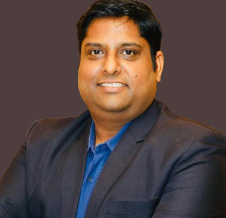
Samik Roy,
Head-Growth Business,
Oracle India
According to Samik Roy, Head - Growth Business, Oracle India, "In India, midsize businesses have seen tremendous growth in ERP adoption." Midsize companies require ERP application that are easy to buy, install, and maintain, but that still give them the power, security, and functionality of enterprise-class systems - at a fraction of the cost. They want solutions for which the implementation time is very short to reduce the overall cost. Adoption of ERP application helps midsize companies grow faster. Through ERP solution, midsize business can integrate various aspects of its business to achieve synergy and therefore work towards better and faster returns. "A fully-optimized ERP suite will provide useful information to the decision-makers in the company that they can use to leverage ERP technology for business growth," says Samik.
The transition from large custom projects that are complete and costly to a more configurable approach has stood in good stead for ERP to be adopted by the smaller firms. Another factor that has spurred adoption of ERP and CRM by SMEs is a willingness to acquire these solutions in a hosted or SaaS model. As more ERP vendors embrace SaaS, more customers will have the opportunity to leverage the offerings and take advantage of solutions that were previously too expensive and complex.

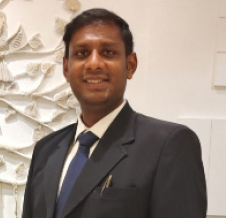
R. Sukumar,
General Manager-Sales,
Ramco OnDemand ERP
"SMEs often find it difficult to achieve higher business efficiency, employee productivity, and responsiveness to customer needs. Businesses are hindered by business systems that simply cannot keep up," says R. Sukumar, General Manager - Sales, Ramco OnDemand ERP. Legacy systems lack the agility to support the changes in business scenario and hence processes. The systems not being integrated also makes it difficult to obtain complete visibility into business operations, thus hampering timely decision- making. Responsiveness suffers due to systems that cannot scale to handle the increasing number of transactions generated by a growing customer base. With legacy systems, communications with geographically dispersed suppliers and partners is difficult. "In the competitive business arena of today, clients are increasingly demanding, and it is pivotal that their demands are catered to with utmost agility. These are some of the factors that bring about the need for an appropriate ERP and CRM solution among SMEs," says N. C. Ananthasayanam, General Manager, Corporate Strategic Alliance, Ramco.
"A conventional ERP model, which was once looked upon to provide the right kind of business relief, also produced its own set of difficulties, in terms of huge cost, long implementation time, added infrastructure and lack of flexibility," says R. Sukumar of Ramco.
"However, these limitations are now being successfully allayed with a new-age delivery model - SaaS, by leveraging the power of cloud computing," states Ananthasayanam.
The need for a SaaS model which is comprehensive, which aligns itself with a core competence around a specific industry or set of sub-industrie, which comprises a technology that spans the processing of the entire organization and integrates the needs of sales, finance, accounting, human resources, and supply chain management, which provides scalability and flexibility, and delivers values that stand the test of time, was appropriately addressed by Ramco Systems through Ramco OnDemand ERP. The powerful enterprise-integrating technology, which was earlier available only on an on-premise model, was made available through an OnDemand model, by Ramco Systems.

Thomas Abraham,
Managing Director,
Sage India
"We are seeing an upswing in ERP and CRM with the business sentiments turning positive again. This time around, there is a lot more seriousness among SMEs which have clarity on their requirements and are committed to making the implementation a success. In industries that have shown resilience through the recession, we see a faster uptake," says Thomas Abraham, Managing Director, Sage India.

V K Bansal,
Director,
Nexgen Infosystems
"ERP and CRP are basically aimed to enhance productivity of an organization. It also facilitates cost-effectiveness as SMEs are more prone to attrition of skilled and trained manpower. Thus, multiple and tailor-made use of a centralized data and information are the basic tools of ERP and CRM," says V K Bansal, Director, Nexgen Infosystems.
ERP Solutions for SMEs
At about $25 billion, the size of the ERP market is mind-boggling.
There is a clear shift in the market by both large and small software vendors such as SAP, Oracle, Ramco and Sage to bring software previously reserved for large enterprises down market to satisfy the growing needs of SMEs.

Debdeep Sengupta,
Vice-President, SME and Channels, SAP India
"With clients in India realizing the importance of automation in optimizing their business processes, SAP's solutions package for enterprises holds a better value proposition for the customers’ businesses," saya Debdeep. "SAP is constantly engaged in introducing innovative solutions and strategies for the Indian market that can help them grow their businesses flexibly at the minimum operating costs. SAP strong strategy, industry portfolio and the market leadership makes it the first choice for customers across sectors," adds Debdeep.
"SAP is an undisputed leader in the SME space with over 3,470 customers in India. Understanding the requirement of receiving maximum RoI in the least TCO, SAP has introduced software solutions that are easy to consume and reduce the implementation time from months to weeks," says Debdeep.
On the other hand, midsize companies have outpaced adoption of CRM OD than the enterprise customers in India. In fact, companies across different verticals have adopted these solutions to manage their customers.
"We are seeing an increased demand from this segment for technology solutions to help address their business needs and make them profitable. We offer such solutions and have been serving midsize customers for a long time," says Samik.
It is a known fact that India houses several midsize companies across all industry verticals, and this segment is playing a big role in contributing to the country's growing economy. "Oracle provides scalable, industry-specific, and best-in-class functionality for fast-growing companies with limited budgets. Oracle has broadened its midsize offerings with the acquisition of Sun, the leading provider of reliable servers, flexible storage, and pre-tested solutions," says Samik.
Oracle offers Oracle Business Accelerator (OBA) for faster and standard implementation. We have also addressed the time to implement challenge through our Oracle Accelerate program, which allows our partners to develop industry-specific solutions, and business flows that reduce the on-site implementation time greatly. Over 1,200 business flows across 80 industry-specific solutions are available to SMB customers in Asia-Pacific from Oracle and its partners, including in India.
Safe Bet for VARs
The biggest change for channel companies will be the conversation with both their clients and vendors. No longer will it be all about the "technology", but rather about a combination of technology people and processes. Considering SaaS for a departmental project to get the customer comfortable with the delivery and acquisition model may be a first step in building a SaaS practice without risking a customer relationship.
VARs can show customers how ERP implementation is the need of the hour. Although SMEs have only a limited budget for capital IT purchases, they are badly in need of ERP solutions, and often they are well aware of it. Channel partners will continue to play a strategic role in the new market.
There are instances that in some cases the channel feels displaced in a SaaS-based mode, users may demand more functionality as
sophistication increases necessitating an upgrade to a more feature-rich edition or service. Integration requirements with current applications may be needed as the SaaS application becomes ingrained in the business process. Professional service may also be required to make customization. In these cases, channel has perfect opportunity to remain engaged.
Majority of Oracle's business is generated through its strong partner network across the country, including ISVs, SIs, VADs, platform providers and resellers. "We go to market together and also invest in right enablement of professionals from our partner organizations," says Oracle.
The Oracle India Partner Solution Centre (PSC) represents Oracle's commitment to grow our partners' businesses through technical assistance, training, lead generation opportunities and access to state-of-the-art infrastructure. The Gurgaon centre is tightly integrated with Oracle's research and development centres in China and Singapore as well as the India sales teams. This gives Indian partners access to Oracle's product expertise and also allows them to stay ahead of competition by developing compelling IT solutions for industries and governments. PSC has undertaken many projects since its inception and has been instrumental in increasing partner participation with Oracle by more than 150%. Some of the Oracle's partners that have engaged with PSC include: HCL Infosystems, Lasersoft, SysArc, 3i Infotech and Nucleus Software, among others.
Through Oracle Partner Network Specialized program, Oracle has taken its partner network to the next level. Through this program, Oracle allows partners to formally certify specializations to differentiate themselves and their offerings, be recognized for their expertise and become preferred solution providers to Oracle customers. The new OPN tools provide partners easy access to Oracle training, order booking, events, and other capabilities that will help them learn, grow and profit with Oracle.
For more contact:
edit@varindia.com

See What’s Next in Tech With the Fast Forward Newsletter




Tweets From @varindiamag
Nothing to see here - yet
When they Tweet, their Tweets will show up here.